

CGRP Suppression via TRP Channel Modulation
Calcitonin Gene-Related Peptide (CGRP) is a key neuropeptide involved in migraine pathophysiology, promoting vasodilation, neurogenic inflammation, and nociception.
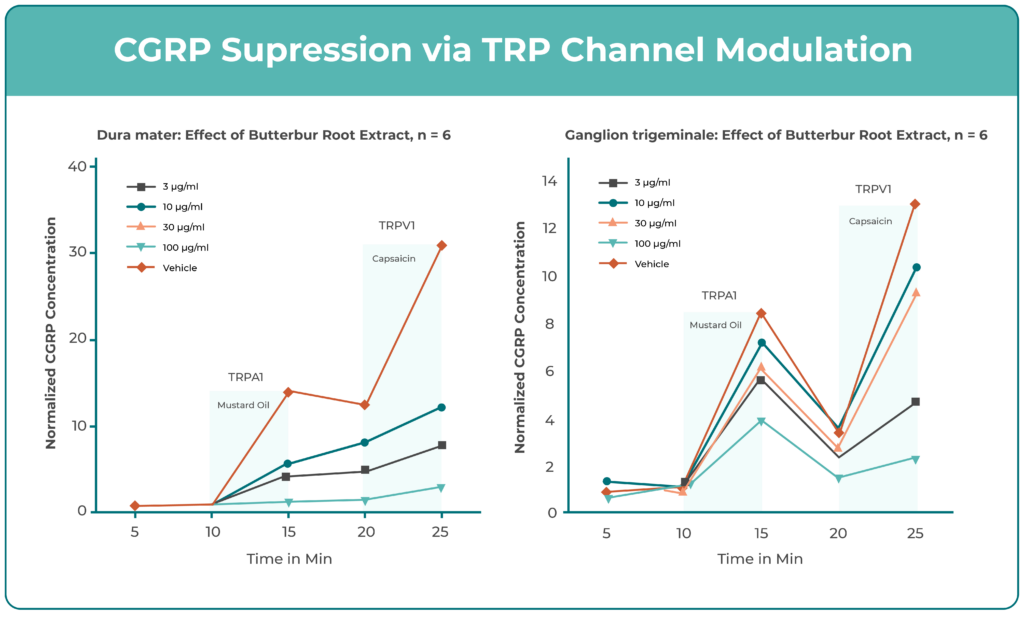
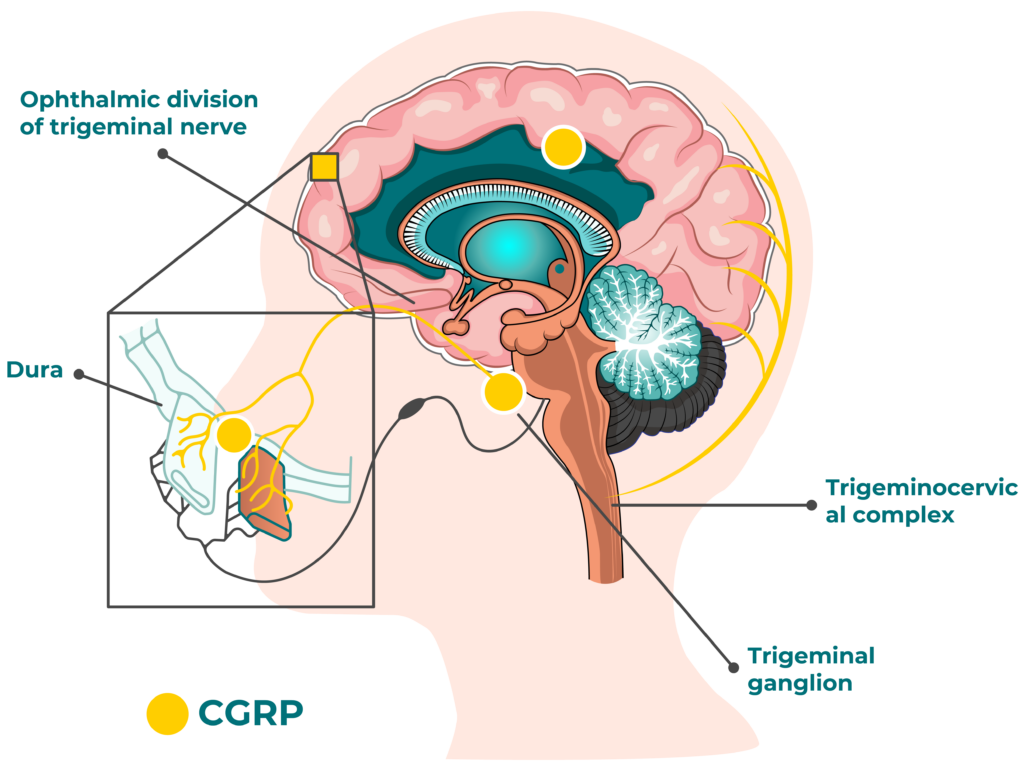
It is released from trigeminal afferents and dural blood vessels during migraine attacks. Preclinical studies have demonstrated that petasin and isopetasin inhibit CGRP release via antagonism of TRPA1 and TRPV1 channels.
Proprietary Butterbur Petasin significantly suppresses CGRP release in both the dura mater and trigeminal ganglion in a dose-dependent manner. Higher concentrations (30–100 µg/ml) show the greatest inhibition, supporting its role as a natural CGRP inhibitor for migraine prevention. These ion channels are upstream regulators of CGRP exocytosis.
By modulating these channels, Proprietary Butterbur Petasin mimics some of the mechanistic effects of CGRP monoclonal antibodies and gepants, offering a biologically plausible and non-pharmacologic route of CGRP suppression.

Sources
Front Neurol. 2022 Apr 26;13:864689