

Pathophysiologic Targets in Migraine: Proprietary Butterbur Petasin® Mechanisms
Proprietary Butterbur Petasin exerts multimodal effects across key migraine pathophysiologic pathways.
It inhibits inflammatory mediators such as prostaglandin E2 (PGE2) and leukotriene B4 (LTB4), reducing peripheral sensitization. It modulates transient receptor potential channels – TRPA1 and TRPV1 – linked to trigeminovascular activation and CGRP release.
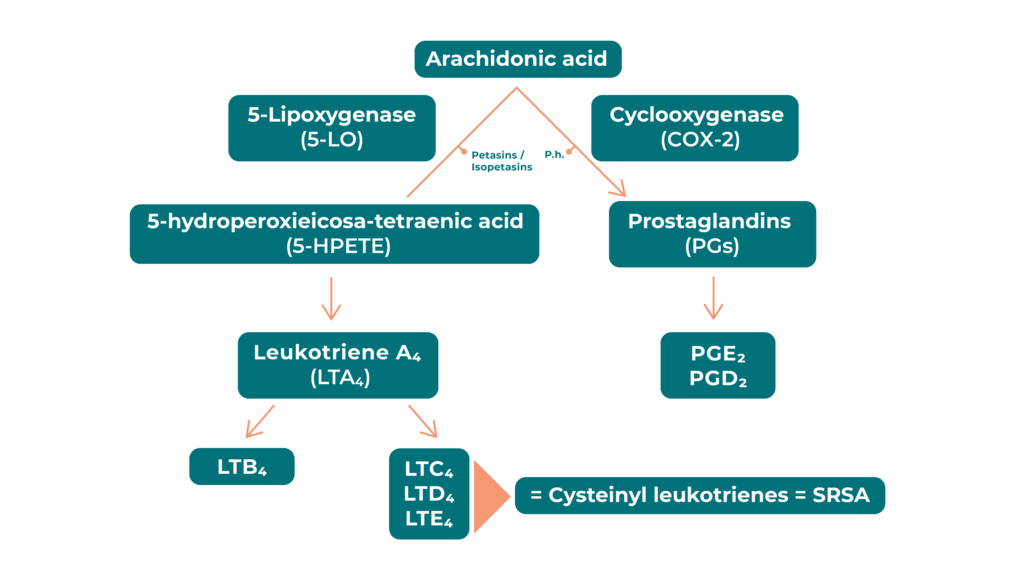
Additionally, Proprietary Butterbur Petasin demonstrates calcium channel blockade, which may decrease cortical hyperexcitability and nociceptive transmission. Neuroprotective effects are supported by antioxidant activity, including reactive oxygen species (ROS) scavenging.
Collectively, these mechanisms support the role of Butterbur Petasin in attenuating both central and peripheral components of migraine pathogenesis.

Sources
Front Neurol. 2022 Apr 26;13:864689